
From Entertainment to Healing: How tourism integrates wellness, psychology, and transformative experiences.
Psychology, tourism, and wellbeing converge to create conscious experiences: biophilic design, nature, and travels that transform mind, body, and emotions.
Aquí tienes la traducción profesional de tu texto, adaptada para mantener el rigor académico y la fluidez del sector turístico:
«As a senior psychology student and a tourism professional specializing in sustainability and regeneration, my focus centers on a key intersection: how environments influence our minds, emotions, and bodily sensations. From this dual perspective, I can clearly see how the sector is evolving toward proposals that integrate wellbeing, conscious design, and a connection with nature—not as add-ons, but as the very essence of the experience.
The travel experience is expanding; today, it is an opportunity to go through personal processes, reconnect with the body, and regain mental clarity. It is not just about resting, but about integrating what has been lived and initiating real transformations. Several theoretical frameworks help us understand this evolution:
Attention Restoration Theory (Kaplan): Suggests that natural environments help restore our attentional capacity and improve cognitive functions.
Biophilia Hypothesis (E.O. Wilson): Argues that we have a biological inclination to seek contact with life. Neuroscience supports this: observing vegetation decreases blood flow in the prefrontal cortex, reducing stress and cognitive load.
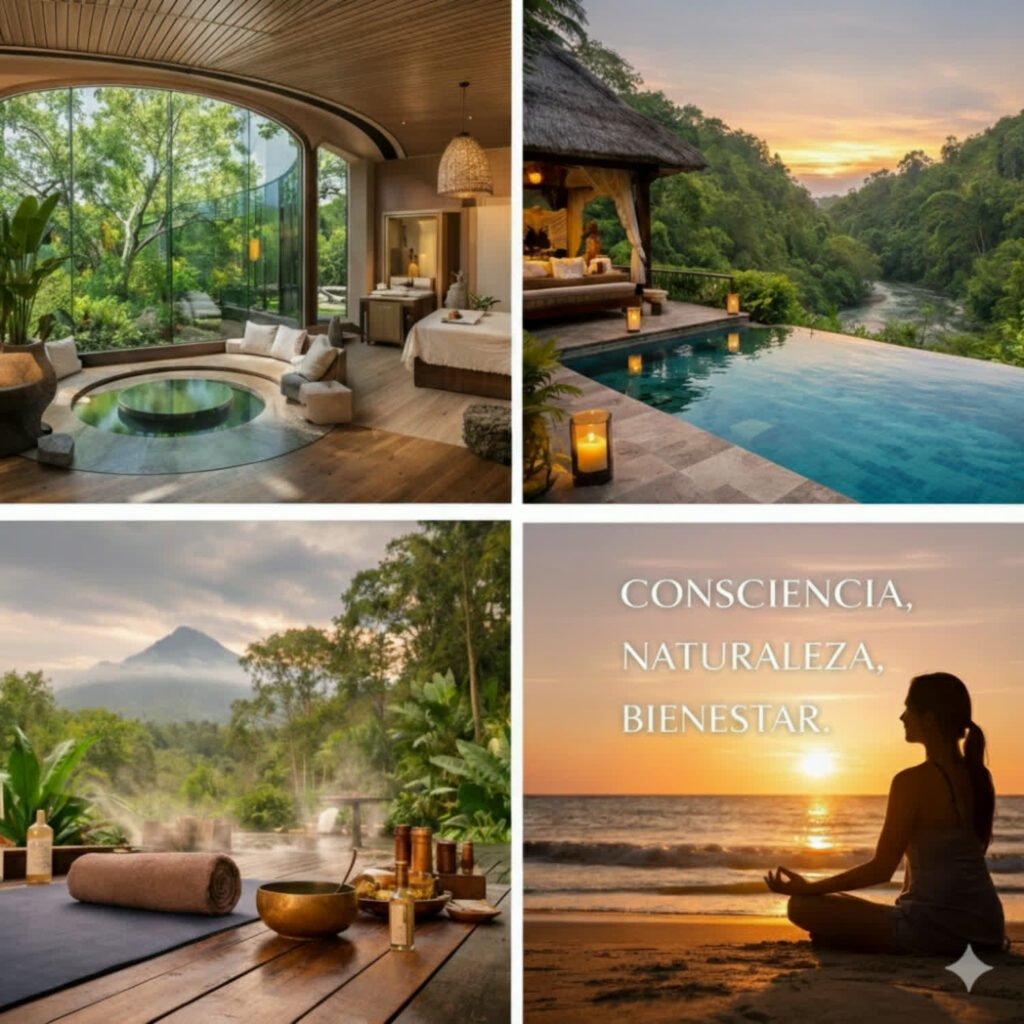
Biophilic Design: Spaces with natural light and organic materials facilitate states of physiological relaxation—a transition that began in healthcare architecture and is now powerfully entering the hospitality industry.
What we are witnessing today is a structural reconfiguration. It is no longer enough to modify structures to make them ‘green’ or sustainable; the change is deeper. It is about how human beings inhabit space and, above all, about feeling. Today, wellness means caring for mental and emotional health with awareness and purpose. The numbers confirm this: the sector surpassed one trillion dollars in 2024 and projects massive growth by 2030.
Aquí tienes la traducción de este último bloque, manteniendo el enfoque en la innovación y el propósito profesional:
«Cutting-edge examples are already embodying this convergence toward a ‘Living’ model or holistic habitats:
Wild Origins (Neil Jacobs): A space to reimagine how we live and connect, where instinct and purpose guide regenerative development.
AMRA: The first integrative wellness resort, designed as an ecosystem that utilizes neuroscience and connection with the environment to promote longevity and daily balance.
Benchmarks like Mandapa (Bali) or Nayara Springs (Costa Rica), where architecture and psychology engage in a dialogue to generate genuine wellbeing.
This evolution is, in my view, both necessary and deeply positive. More and more people are seeking experiences that add meaning, and an increasing number of projects are responding with long-term vision and design. This intersection of psychology, health, hospitality, and regeneration is not a passing trend; it is a fertile field that we are only beginning to explore.
That is exactly where I want to continue working.